
 Five Star Customer Service
 Stress Free Switching
 Utility Management
 Competitive Prices
Switching is a paperwork excerise, not a physical switch
Your supplier is simply the company that buys electricity wholesale and sells it to you. In the UK's deregulated energy market, you have dozens of options, and switching between them is designed to be straightforward.
The confusion often comes from businesses thinking they need to notify multiple parties or arrange physical changes. You don't. Your new supplier handles everything behind the scenes, including notifying your old supplier and coordinating with the network operator.
The Critical Renewal Window You Need to Know About
Here's something that catches out thousands of businesses every year. You can't just switch your business electricity supplier whenever you feel like it.
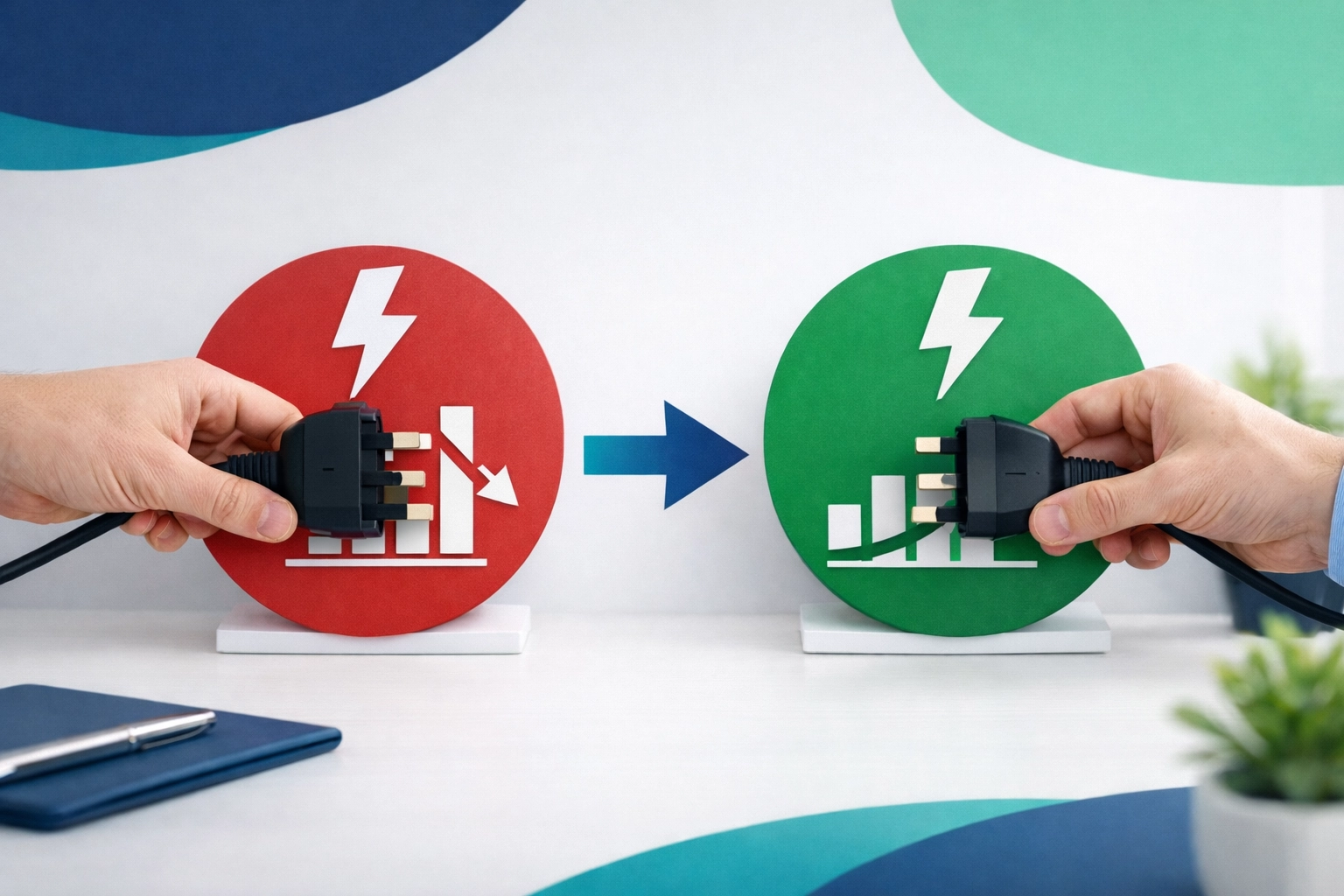
Most business energy contracts are fixed-term agreements lasting between one and five years. During this fixed period, you're locked in. The only time you can switch without penalty is during your renewal window, which typically opens 6-12 months before your contract expires.
Miss this window, and you'll automatically roll onto your supplier's out-of-contract rates. These are often called deemed rates or rollover rates, and they're genuinely shocking. For a clear overview of how business energy contracts work, including what can happen at the end of a contract, see Ofgem guidance on setting up a business energy contract.
The Deemed Rate Trap
Deemed rates are the default tariffs suppliers place businesses on when their fixed contract ends and no new agreement is in place. These rates aren't competitive. They're designed to be expensive, encouraging you to either renegotiate or switch. If you want to double check your options and the typical steps involved in switching, Citizens Advice on switching your small business to a new energy supplier is a useful reference.
We've seen businesses paying 30-60% more on deemed rates compared to their previous fixed contract. For a medium-sized business using 50,000 kWh annually, that could mean an extra £5,000-£8,000 per year just because they missed their renewal window.
The worst part? Many businesses don't realise they're on deemed rates until they've been paying inflated prices for months. The bills keep coming, the amounts keep rising, and it's easy to assume it's just market conditions rather than a contract issue.
This is precisely why tracking your contract end date matters. Mark it in your calendar. Set a reminder for 12 months before. Or better yet, work with an energy broker who tracks these dates for you.

Why a Human Expert Beats an Online Calculator Every Time
Online comparison tools have their place. For domestic energy, they work reasonably well. For business energy? They're frustratingly limited.
Here's what most online calculators can't do:
They miss offline rates. Many of the best business energy deals aren't published online. Suppliers hold back their most competitive rates for direct negotiation or for brokers they work with regularly. An online tool only shows publicly available tariffs, which are rarely the best deals available.
They struggle with complex meters. If your business has a half-hourly (HH) meter, especially if you're on a multi-site contract or have unusual usage patterns, online calculators often can't process your data accurately. They'll either give you an error message or provide quotes based on incorrect assumptions.
They can't negotiate. An online form submits your details to suppliers who respond with standard offers. A human broker, on the other hand, can negotiate on your behalf, push back on rates, and leverage relationships with suppliers to secure better terms.
They don't explain the small print. Automatic renewal clauses, standing charges, climate change levies, pass-through costs. These details hide in contract terms, and they can significantly impact your total cost. A comparison algorithm doesn't explain these nuances.
At Clearsight Energy, we handle all of this manually. We know which suppliers are competitive for your industry, your consumption level, and your contract length. We can access off-market rates and negotiate terms that an automated system simply can't reach. If you also want to tighten up the rest of your bills, we can help you compare and switch other essentials like Business Gas Comparison and Business Water Comparison.
Your Simple Three-Step Roadmap for Switching
Switching business electricity doesn't need to be complicated. Here's exactly what you need to do.
Step 1: Find Your Key Contract Information
You'll need three pieces of information:
- Your MPAN (Metering Point Administration Number), a unique 13 or 21-digit reference that identifies your electricity supply point
- Your annual consumption in kilowatt-hours (kWh), usually found on your bills
- Your contract end date, which determines when you can switch penalty-free
All of this information lives on your current electricity bills. If you can't find your bills or the details aren't clear, your current supplier must provide this information upon request.

Step 2: Get the Market Shopped Properly
This is where most businesses either waste time or leave money on the table. Shopping the market yourself means contacting multiple suppliers individually, requesting quotes, waiting for responses, and then trying to compare offers that all present information differently.
The smarter approach? Let an expert do this for you.
A broker like Clearsight Energy can get quotes from multiple suppliers in a single day, compare them properly (including all the hidden costs), and present you with a shortlist of genuinely competitive options. We'll explain the differences, highlight any red flags in contract terms, and help you understand exactly what you're signing up for.
Step 3: Sign and Switch
Once you've chosen your new supplier, you'll sign a Letter of Authority (LOA) and a new contract. This process is usually electronic and takes minutes.
Your new supplier handles everything else. They notify your old supplier, coordinate the switch date with the network operator, and ensure the changeover happens seamlessly. You don't need to contact your old supplier, arrange any physical work, or worry about a gap in supply.
The switch typically completes within 7-14 days, depending on your meter type and the time of month. Your power supply continues uninterrupted throughout.
Common Questions We Hear About Switching
Will my electricity supply be interrupted? No. The physical supply never changes, only the company billing you for it. There's zero risk of power cuts or service interruption.
What if I'm in a long contract with years remaining? You'll typically face early termination fees. Calculate whether the savings from a new deal would outweigh these fees. Sometimes they do, especially if energy prices have dropped significantly since you signed.
Can I switch if I'm on deemed rates now? Absolutely. In fact, you should switch immediately. Deemed rates have minimal exit penalties, and you can usually switch within days rather than weeks.
What happens to my old supplier? Your new supplier sends them a termination notice. You might receive a final bill covering any outstanding charges, but you don't need to do anything yourself.
Why Businesses Choose Clearsight Energy
We're not just another comparison site. We're energy consultants who genuinely care about getting you the right deal, not just any deal.
When you work with us, you get access to rates that online tools never see. You get someone who understands your business, your usage patterns, and your priorities. And you get ongoing support, not just at switching time but throughout your entire contract.
We track your renewal dates so you never accidentally roll onto deemed rates. We monitor the market and advise you if early switching makes financial sense. And we're here to answer questions whenever they come up.
Thousands of UK businesses trust us to handle their energy procurement because we remove the stress, save them money, and give them back hours they'd otherwise spend wrestling with suppliers and contracts.
Making Your Next Move
If your contract is coming up for renewal in the next 12 months, now is the time to start the switching process. Don't wait until the last minute, and definitely don't let your contract auto-renew onto deemed rates.
Get in touch with the team at Clearsight Energy and let us show you what's available. We'll handle the legwork, negotiate on your behalf, and make sure you're getting a genuinely competitive deal that reflects your actual business needs.
Switching business electricity should save you money and simplify your life, not add stress. With the right support, it does exactly that.
