
 Five Star Customer Service
 Stress Free Switching
 Utility Management
 Competitive Prices
What is the Climate Change Levy?
The Climate Change Levy is a government tax on energy delivered to non-domestic users in the UK. It was first introduced in April 2001 as part of a broader strategy to meet international commitments for reducing greenhouse gas emissions. The primary goal of the levy is to incentivise businesses to become more energy efficient and to lower their overall carbon footprint. For the official rates and current guidance, see GOV.UK Climate Change Levy rates.
Unlike many other taxes, the levy is collected by energy suppliers and then passed on to HM Revenue and Customs. It applies to the energy used for lighting, heating, and power. By increasing the cost of energy slightly through this tax, the government encourages organisations to invest in energy saving technologies and better operational practices.
The levy is divided into two separate rates. The main rate applies to most business energy users and is based on the quantity of energy consumed. The second rate is the Carbon Price Support, which is paid by owners of electricity generating stations and operators of combined heat and power plants. This guide focuses on the main rate that appears on standard business energy invoices.
Taxable Commodities and Who Pays
Most businesses in the industrial, commercial, agricultural, and public service sectors are subject to the Climate Change Levy. It is calculated based on the units of energy used, meaning the more a business consumes, the more it pays in tax.
The levy applies to several types of energy, which are referred to as taxable commodities. These include electricity and natural gas supplied for business energy use in the UK. It also covers LPG and solid fuels such as coal, lignite, coke, and semi-coke.
Businesses that are VAT registered and operate within the standard business sectors usually see this charge as a separate line item on their monthly or quarterly statements. It is important to note that the levy applies regardless of whether the energy comes from a standard contract or if the business has defaulted to out of contract business energy rates.
The Main Exemptions and Reliefs
Not every organisation is required to pay the full rate of the Climate Change Levy. There are several categories where a business or organisation may be exempt or qualify for a reduced rate. Understanding these categories is vital for accurate financial planning and ensuring that a business is not overpaying on its utility bills.
| Exemption or relief type | Who it usually applies to | Evidence you are usually asked for |
|---|---|---|
| Low usage exemption under the de minimis threshold | Small sites with very low energy use, sometimes similar to domestic use | Recent bills or meter readings to show usage stays below the threshold, plus VAT status information where relevant |
| Charity exemption for non business use | Charities using energy for qualifying non business activities | A charity declaration and an explanation of the non business activity, sometimes with a basic breakdown for mixed use sites |
| Domestic and residential use exemption | Residential parts of mixed use buildings, student accommodation, care homes, holiday lets | A simple apportionment method for mixed use sites, plus floor plans or occupancy details if requested |
| Excluded processes | Certain industrial uses where energy is used in a process rather than as fuel, such as chemical feedstock or electrolysis | Process description and supporting technical notes, often confirmed by the business and sometimes reviewed with the supplier or HMRC guidance |
Low Usage and the De Minimis Threshold. Small businesses that consume very little energy may fall into the de minimis category. This threshold is set at a level where the consumption is considered similar to that of a domestic household. If a business stays below the usage limit, it is exempt from the levy and may also qualify for a lower rate of VAT. This can apply to corner shops or small offices with minimal heating and lighting requirements.
Charities and Non Business Use. Charities that use energy for non business activities are typically exempt from the levy. If a building is used for both charitable and business purposes, the exemption may only apply to the portion of energy used for the charitable side. Clear record keeping helps support any split provided to suppliers.
Domestic and Residential Use. Energy used for residential purposes is exempt. This includes student accommodation, care homes, and self catering holiday lets. In mixed use buildings, part of the energy bill may be exempt based on a reasonable split between residential and commercial use.
Excluded Processes. Certain industrial processes are excluded from the levy because the energy is not being used as fuel. If energy is used as a chemical feedstock or in an electrolysis process, it may fall outside the tax. These exclusions can be technical, so businesses often document the process and keep supporting notes alongside billing records.
Climate Change Agreements and Discounts
Energy intensive industries face a unique challenge in remaining competitive while paying environmental taxes. To address this, the government introduced Climate Change Agreements (CCAs). These are voluntary agreements made between UK industry sectors and the Environment Agency. For the official eligibility and process overview, see GOV.UK Climate Change Agreements.
By entering a CCA, a business commits to meeting specific energy efficiency or carbon reduction targets. In return, the business receives a significant discount on the Climate Change Levy. The sectors eligible for these agreements include chemicals, paper, food and drink, and various types of manufacturing.
The process of maintaining a CCA involves rigorous monitoring. Every two years, the performance of the participant is assessed. If the business has met its agreed targets, it continues to receive the discount. If it has failed to meet the targets, it may need to pay a buy-out fee to remain in the scheme and keep the discount for the next period. This system ensures that the tax relief is directly tied to tangible environmental improvements.
Understanding Your Bill and Registration
For most organisations, the energy supplier handles the administrative side of the levy. The supplier calculates the charge based on meter readings and adds it to the invoice. However, the business is ultimately responsible for ensuring that its status is correctly reported.
| Bill term | What it means in plain English | What to check |
|---|---|---|
| CCL or Climate Change Levy | The tax charged on eligible non domestic energy use | Check it appears where you expect it, and check whether any exemption or reduced rate you have claimed is reflected |
| VAT | Value Added Tax applied to the bill | Check the VAT rate shown matches your site and usage type, especially if part of the supply should be treated as domestic or exempt |
| kWh | The unit used to measure energy consumption | Check the usage period, meter readings, and any estimates, and compare with your own records where possible |
| Standing charge | A fixed daily charge for keeping the supply connected | Check the dates billed and whether you have more than one meter or supply point being charged |
If a business qualifies for an exemption or a discount through a CCA, it must provide the supplier with a specific certificate. These forms, known as PP10 and PP11, are the official documents used to claim relief from the levy. Without these forms, the supplier is legally obligated to charge the full rate.
It is helpful to check bills regularly to ensure that the levy is being applied correctly. Business owners should look for a line labelled CCL or Climate Change Levy. If the business has recently changed status or moved premises, this is a key area to review during the process of when to renew a business energy contract. Mistakes in registration can lead to backdated charges or missed savings.
Strategies for Managing CCL Obligations
A practical way to manage CCL is to treat it as a checklist. Reduce taxable consumption where you can, then make sure your billing and evidence match your current status.
Step 1 Reduce energy use that sits inside CCL. Start with measures that cut electricity and UK business utility natural gas consumption without changing how the site operates.
- Upgrade to LED lighting and add occupancy controls
- Improve insulation and reduce draughts
- Tune heating and building controls and set clear time schedules
- Service plant and machinery so it runs efficiently
Step 2 Measure usage with better data. Use smart meters to spot patterns and peaks and to check whether changes are working. Metered data also supports the move to market wide half hourly settlement, which relies on more granular consumption information.
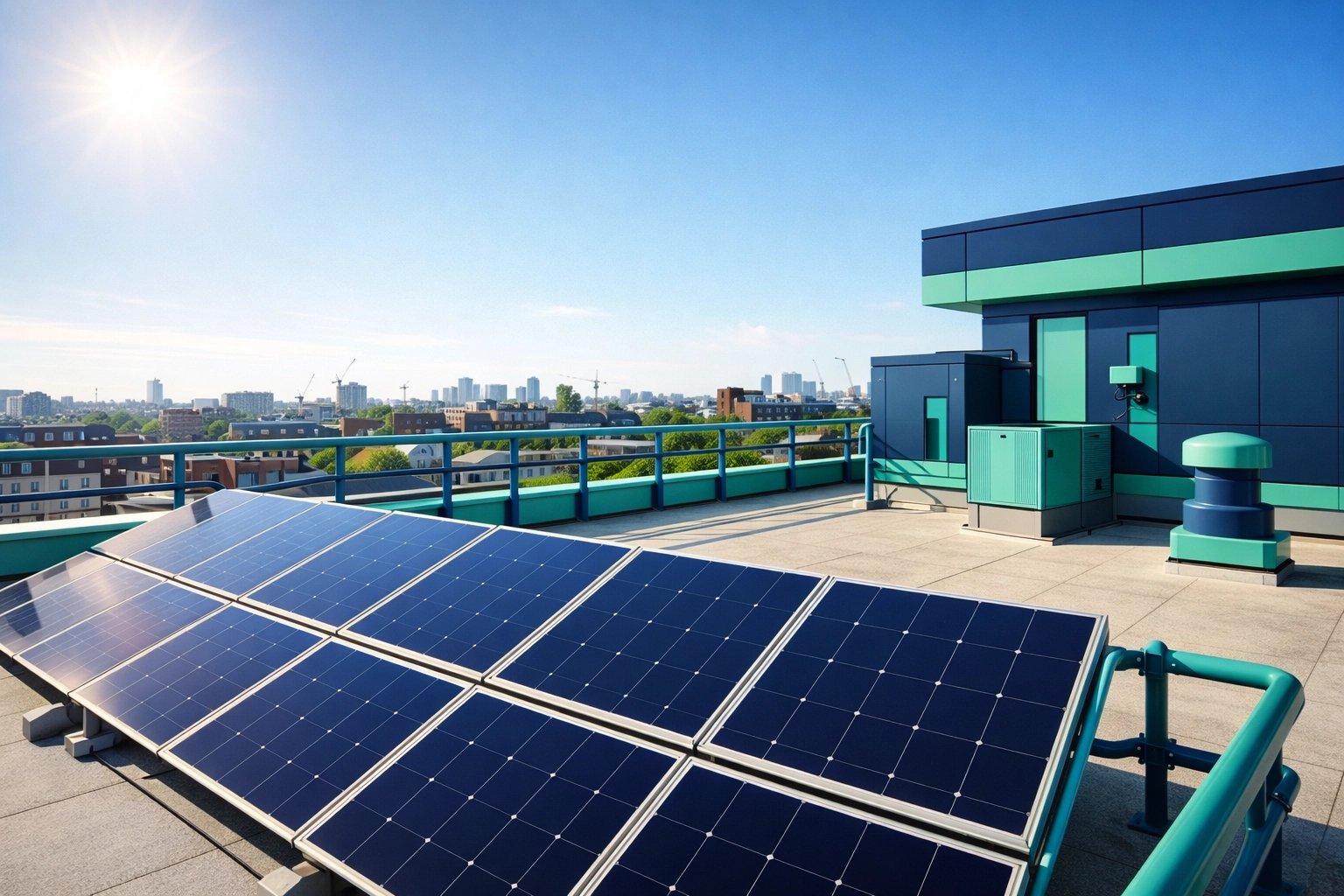
Step 3 Review on-site generation and how it affects taxable supply. On-site renewables such as solar can reduce how much electricity you buy from the grid. The CCL position depends on how energy is supplied and measured, so it is worth checking how your metering and supply arrangements treat any self generated electricity.
Step 4 Keep certificates and account records aligned. Maintain clear records for any exemptions or reduced rates.
- Keep copies of VAT declarations and supporting evidence
- Keep relevant certificates up to date and ensure they are on file with the supplier
- Keep copies of any letters of authority used to manage accounts
The Climate Change Levy remains a cornerstone of the UK's environmental policy for the business sector. While it represents an additional cost, the various exemptions and the structured discount system through Climate Change Agreements provide pathways for businesses to mitigate the financial impact. By focusing on energy efficiency and maintaining accurate administrative records, organisations can navigate this tax framework effectively while contributing to a lower carbon economy. For more detailed insights into managing business utilities, the guides section offers further information on various industry topics.
